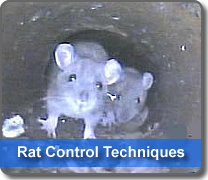
The following information is a guide to how rats enter you house, walls, loft and sub-floors, the techniques used to identify where they are getting in and solutions to prevent them from entering in the future.
Rat problems in houses and business`s are on the increase due to several reasons including the recent mild winter, the well documented floods around the country forcing rats to find their way out of the sewer systems, local authorities cutting back on baiting and pest control contracts and as more people are extending their homes rather than moving poor building practices allow our little friends access opportunities that were previously unavailable.
Having rats in your house is a pretty unpleasant experience and most people naturally do whatever they can to get rid of the unwelcome visitors by laying rat traps or rat poison, this can lead to further problems such as odours, flies and maggots in your home and the main problem is that it will not prevent future rodent activity.
We are often asked if we see many rats when we survey sewers and the answer is only very occasionally, you are more likely to see them on the larger diameter sewers because of their vast numbers, on domestic systems they tend to hear the manhole cover as it is lifted or the camera moving towards them and they make their escape.
However they do take little excursions from the main sewers and into the smaller diameter systems that run straight up to your property, think of the sewers as motorways and your private system as an A road and they have a nice little warm, safe and ready made network in which to move around and before you know it they are literally a whisker (pun intended) away from your cavity wall, sub-floor or loft space.
How Do Rats Get Into Your House, Cavity Wall, Sub-Floor or Loft Space
Rats will find their way out of any drainage system given the opportunity and this usually occurs due to a poorly designed system, a system that has been altered or where a collapse, broken or displaced pipe has occurred. As mentioned earlier your drainage system gives the rat direct access up to and in a lot of cases beneath your property, so if they do find their way out they then tend to have access to cavity walls and sub-floors which is in affect a little ratty heaven that opens up a whole new world of feeding opportunities..
Obviously you don't want them crawling over your kitchen work surface or nibbling in your bread bin as they have little bladder control and rats urine can cause some serious health problems, rats carry diseases such as Salmonella, Weil’s disease and E.coli and the ticks and fleas they bring with them can cause serious allergies, they are also destructive and will chew through cables, pipes, wood, brick and basically anything softer than their teeth to get where they are going.
So the scratching noises start in the cavity wall or you hear them moving around in the roof space or sub-floor and you call out pest control, they put down poison or traps and try to get rid of the little buggers. It is about this time that you should consider having a drain camera inspection carried out to find their point of access, if things go well you find an obvious point of access and seal it off, if the drainage system is sound you can concentrate on other possible sources of access.
Page Sponsors 
There's A Rat In Me Kitchen, What Am I Gonna Do
If those boys from UB40 are still having the same trouble as when they first released the above in 1986 i would firstly tell them to change their pest control contractor, i would then advise them to read the following.
I would estimate that 90% of the drain related rat problems i have looked into have been due to either redundant branch lines or poorly capped off branch lines and junctions when building works were undertaken.
The typical scenario would be the new conservatory or extension going on the back of the property, the new build is to be sited where the old kitchen gully used to be and the kitchen is to be moved.
When the foundations or slab for the new build are put in the ground worker/builder digs out the old kitchen gully and stuffs a cement bag in the end of the remaining pipe work, or they leave the old gully in and put a piece of chip board over it before throwing sand or soil on it prior to laying the floor slab. So along comes Mr Rat a few months later and chews through the cement bag or chipboard and finds a warm cosy home for himself and his chums.
Branch lines and junction often become redundant due to building and renovation works, but if properly capped off they should not cause any problems. Its not uncommon to find junctions that were installed and never connected when the property was built, but in these cases you would expect the rat ingress to have gone on for some years. If however the rodents have been a calling since your recent building works there may well be a connection.
Fortunately modern drain lining methods mean that we can cap off redundant junctions without excavation in many cases, the problem then is that if you seal the connection off and the rats are on the house side they are trapped. Its best to have the works done in conjunction with pest control putting poison or traps down. The worst case scenario is that the rats are forced to find another way out and in doing so create another way in, one that can not so easily be traced.
Defective Drains & Rodent Ingress
Whenever anybody mentions that they have seen a rat it is usually followed by "as big as a" Cat, Dog, Pot Bellied Pig etc. In reality there is not a lot to a rat in the way of large bones apart from of course the sabre toothed variety, they can therefore squeeze through the smallest of gaps.
So if you have broken pipe work or pipe work with displaced joints such as those shown in the image to the right they will find a way through, if these defects are local to external gully pots or internal/external rest bends they are literally inches from your cavity wall or sub-floor.
Another indication of rat activity are small bore holes adjacent to outside gully pots and soil vent pipes and any decent pest control contractor should firstly be putting his poison down there and then recommending you get your drainage system surveyed.
Other Rat Access Points
There will be occasions where rats leave the safety of the drainage system but can`t get direct access to sub-floors or cavity walls, they will however find their way through broken air bricks or large holes where waste pipes or service pipes have been poorly fitted so its always worth having a good look around the outside of the property to see if there are obvious points of access.
Rats will tunnel in the correct ground type and we have found them leaving the drainage system via a defect and entering properties below ground level where water pipes, gas pipes and electric cables pass through the foundations.
Drain Camera Inspection
When you have your system surveyed it is vital that every branch line and junction be surveyed and accounted for, how easy this is will be dependant on the lay out of the system and the number of access chamber available. If there are not sufficient access points it may be necessary to excavate on the outlet of each gully pot or cut into the soil vent pipe.
There are other methods used to locate open joints and defects such as smoke tests, but a detailed camera survey will not only tell you the point of access for the little beggar's it will allow a contractor to assess the best method for rectifying the problem with the least disruption.
How Do I Stop Rats Getting In My Property
Well the first part of the answer as i have already touched on is a good thorough investigation, once the point of exit has been found you can look at several methods for repairing the system, they include the following;
- Using Cipp drain liners or drain patch repairs we can seal disused branch lines and junctions or seal displaced joints and broken pipe work without the need to excavate in most cases.
- Where pipe work has moved or fractured to a point that a lining method is unsuitable then excavation works are required to repair the system.
- Where disused branch lines discharge into manholes or chambers the simple fitting of a compression bung will suffice.
Rat Movie @ DrainDomain.Com
The clip to the right is of a rat that we found nesting beneath a school domestic science/cookery block, staff had noticed
food stuff appearing in the middle of the classroom over night and had their suspicions.
Those suspicions were confirmed when a pupil opened a drawer to get a utensil and found this little fellow staring up at her.
We surveyed the drainage system and found several redundant drainage runs beneath the annexe including this section with the rat nesting in a disused gully pot.
Humane traps were put down by a local pest control contractor and we capped off the redundant branch lines.
Professional Pest Control
If you suspect you have a rat problem it is tempting to tackle the problem yourself and what could be easier than ordering several hundred weight of rat poison or the rolls royce of rat traps over the internet and waging war on the little sods, this however could be a false economy as you spend your hard earned cash on dubious products and then put them down in the wrong place.
Even if you have some success but you are missing an obvious point of access you could be throwing good money after bad especially if they are causing untold damage to cables, pipes etc in your sub-floor in the mean time, put the wrong product in the wrong place and you could have more of an affect on the local cat/dog population than on the number of rodents running around the sewer systems.
There are numerous professional pest control contractors out there most will give you a free visit/advice so make use of them, and just as you would when looking for a builder, plumber or roofer ring around and speak to a few contractors before making a decision.
Page Sponsors 
|